
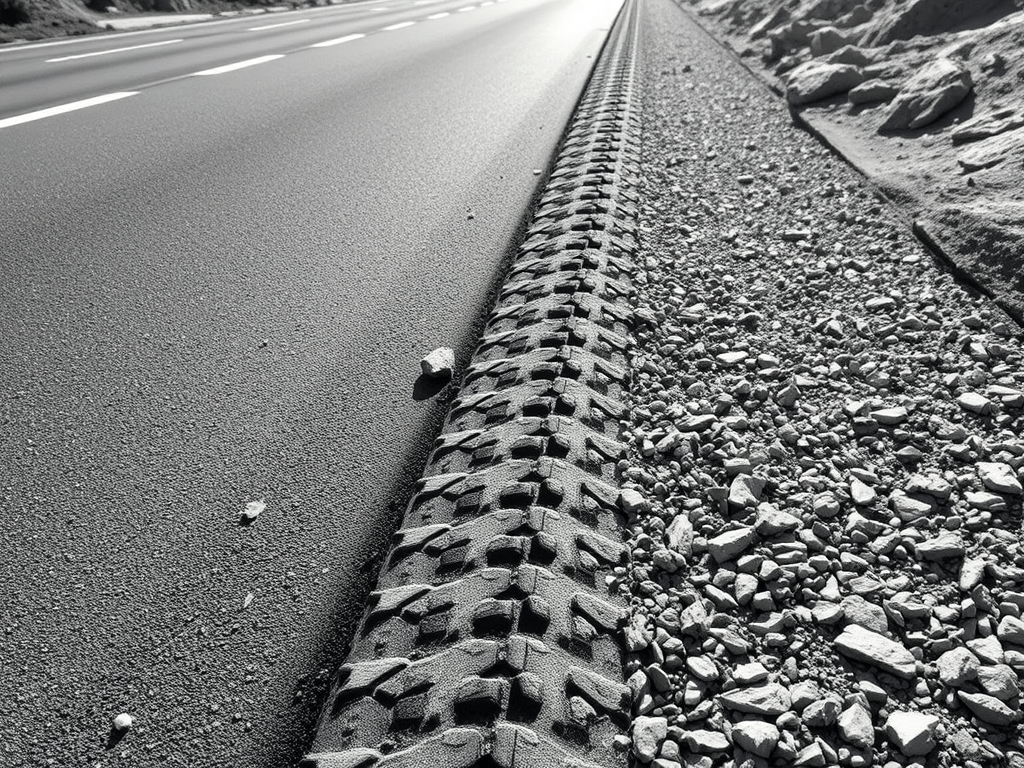
In the ever-evolving world of gravel cycling, tire choice feels like a constant negotiation. Do you prioritize knobs for biting into loose terrain, or a slick center for rolling fast on pavement? The classic image of a gravel tire often conjures up this dichotomy – the aggressive tread for the dirt, the smoother pattern for the road miles linking the good stuff together. I recently tackled a challenging 145-mile ride on my Lauf Siegla, a route that served up a generous and varied mix of gravel and road. Heading out, I fully expected my relatively smooth WTB Byway tires, with their fast-rolling center, to absolutely fly on the pavement sections. Yet, surprisingly, it was the distinctly knobbier Panaracer Gravelking SKs that left me genuinely impressed with their speed, even when the asphalt stretched out before me. Let’s unpack this counter-intuitive finding and dive into the gritty (and smooth) details of why.
This post is a deep dive into the real-world performance of two popular gravel tires, tested under the sustained demands of a long, mixed-terrain effort. As a 190-pound rider aboard my Lauf Siegla, my perspective is shaped by how these tires handled the load and responded over many hours in the saddle. We’ll look at what the manufacturers claim, how the tires felt under power on various surfaces, dissect the technical factors like rubber compound, tread pattern, and pressure, and try to make sense of why the tire with more knobs felt dramatically faster overall on this particular epic ride.
The Testing Ground: 145 Miles of Mixed Terrain
The route I chose for this comparison was a true test of a gravel tire’s versatility. It wasn’t just a simple out-and-back on packed dirt; it was a complex tapestry of surfaces designed to challenge both tire and rider over an extended distance. We rolled over miles of smooth, fast asphalt, linking together stretches of chunky, loose gravel that demanded attention. There were sections of washboard that rattled the bones, packed dirt roads perfect for speed, and stretches of variable quality pavement – from pristine new blacktop to weathered chip-seal.
Conditions on both occasions (as I’ve ridden this route or very similar profiles with these tires on separate days) were generally fair – dry, with temperatures hovering in a comfortable range, though wind was, as always, a factor to contend with. This consistent environment across test rides allowed for a more reliable comparison of how each tire performed over the long haul, minimizing variables like drastically different weather or route conditions.
Tire Specs and Claims: What Do the Manufacturers Promise?
First, let’s look at the contenders and what the brands themselves say about them:
The WTB Byway: I rode the 45c version. WTB positions the Byway as an adventurous road tire that’s equally at home on gravel and dirt. Its defining feature is its tread pattern: a smooth, slick center designed for fast rolling on pavement, paired with transition knobs and more aggressive shoulder knobs for cornering grip when you lean into softer surfaces. The implied promise is speed on the straight and narrow of the road, with confidence when things get loose.
The Panaracer Gravelking SK: I used the 44c version. Panaracer’s Gravelking SK is arguably one of the most popular gravel tires on the market, known for its versatility. Its tread is characterized by small, densely packed knobs spread across the entire casing. Panaracer markets it as a tire for gravel, dirt, and rough pavement. The visual suggests more grip than a slick, but the small knobs imply a reasonable balance for rolling resistance.
My initial expectation, based purely on the visual difference in tread, was that the WTB Byway, with its large slick center, would demonstrably outperform the Gravelking SK on the significant pavement sections of the 145-mile ride.
WTB Byway Performance: My Experience on the Ride
Riding the WTB Byways on this mixed-terrain epic, they felt competent, but they didn’t deliver the straight-line road speed I anticipated. On the smooth asphalt, they rolled reasonably well, but there wasn’t that exhilarating sense of free speed that a dedicated road tire provides, or even the feeling of effortless momentum I was hoping for from that slick center. They felt… fine.
When we hit the gravel, the Byways handled packed dirt and less technical sections adequately. The transition knobs provided some predictability when moving from road to gravel. However, on chunkier or looser gravel, the limits of that slick center became apparent. They required more careful line choice, and there wasn’t a strong sense of aggressive bite when trying to maintain momentum up short, punchy gravel climbs with looser surfaces. Cornering on loose gravel required caution, as the shoulder knobs needed sufficient lean angle to engage.
Based on pre-riding before the 145 mile epic, the WTB Byways were solid all-rounders, but their perceived strengths (road speed) didn’t materialize as expected, and their performance on the more challenging gravel sections felt somewhat compromised compared to a more aggressive tread.
Panaracer Gravelking SK Performance: The Surprising Speed
Switching to the Panaracer Gravelking SKs on a similar long ride was where the surprise unfolded. My expectation was that the all-over knob pattern would feel noticeably slower and perhaps buzzy on the road sections. The reality was dramatically different.
On the pavement, the Gravelking SKs felt fast. They had a smooth, efficient roll and carried momentum exceptionally well. There was a certain feeling of glide that I simply didn’t get from the Byways. The small, densely packed knobs seemed to offer minimal rolling resistance on firm surfaces, and the bike felt lively and quick to accelerate.
On the gravel, the Gravelkings lived up to their reputation. The small knobs provided consistent, predictable grip on everything from packed dirt to moderately loose surfaces. They felt confident on climbs and provided reliable traction when cornering. While perhaps not as aggressive as a tire designed purely for challenging gravel, they offered a fantastic balance of grip and rolling efficiency.
Explicitly, the Gravelkings felt dramatically faster overall on the mixed terrain of this 145-mile ride. This was the counter-intuitive observation that truly stood out. I finished the ride feeling less fatigued, attributing some of that to the apparently lower effort required to keep the wheels spinning, particularly on the extensive road sections.
Deep Dive into the Tech: Unpacking the Factors
So, how can a tire with more knobs feel faster than a tire with a large slick center? The answer lies in a few key technical factors working in concert:
- Rubber Compound: This is arguably the most significant factor often overlooked when comparing tires based solely on tread. The specific rubber compound used by a manufacturer profoundly impacts a tire’s rolling resistance, grip, and durability. A sophisticated, fast-rolling rubber compound, even when formed into knobs, can have lower rolling resistance than a slower, less efficient compound, even with a smoother tread pattern. Panaracer is known for its quality rubber compounds, and it’s plausible that the compound used in the Gravelking SK offers superior rolling efficiency compared to the compound in the WTB Byway, at least at the pressures I was running on these surfaces. It’s the microscopic properties of the rubber itself that dictate how much energy is lost as the tire deforms and rebounds with each rotation.
- Tread Pattern: While the Byway has a slick center, the transition to the side knobs creates edges and potentially less consistent surface contact compared to the uniform, small, and densely packed knobs of the Gravelking SK. On firm surfaces like pavement or hardpack gravel, these small knobs might deform minimally and collectively present a surprisingly low rolling resistance, while still offering the edges needed for grip on looser terrain. The Byway’s shoulder knobs, while good for aggressive cornering, might also create some aerodynamic drag or resistance even when not fully engaged.
- Tire Pressures: Tire pressure is a critical variable. For this comparison, I aimed for similar pressures based on feel and recommendations for my weight (190 lbs) on mixed terrain, typically running somewhere in the low to mid-30s PSI range for both tires, optimized for a balance of comfort and speed on the gravel sections. It’s possible that the Gravelking SK simply performed more efficiently at the specific pressure I chose compared to the Byway. Finding the right pressure for a given tire, rider weight, and terrain is key, and a tire that feels good at a slightly higher, faster pressure while still providing comfort can gain an advantage.
- Tubeless Setup: Both tire setups were tubeless, running with sealant. This is the standard for gravel performance today. Tubeless setups allow for lower tire pressures without the risk of pinch flats, which significantly improves comfort, grip, and often rolling resistance on rough surfaces. A good tubeless setup ensures the tire bead is properly sealed and the tire casing can flex optimally, contributing to overall performance.
Why the Surprise? Analyzing the Factors for the Speed Difference
Synthesizing these technical factors, my hypothesis for the surprising speed of the Panaracer Gravelking SKs over the WTB Byways on this mixed-terrain epic boils down primarily to the rubber compound. While the Byway’s tread design looks faster on paper for pavement, it seems likely that Panaracer’s rubber compound simply offers superior rolling efficiency. Additionally, the very design of the Gravelking SK’s small, dense knobs appears to strike an excellent balance, providing adequate grip for gravel while still rolling remarkably fast on firm surfaces. It offers a consistent contact patch that, at the right pressure for my weight and the conditions, felt significantly faster than the Byway’s slick-to-knob transition.
It’s crucial to acknowledge the subjectivity and specificity of tire performance. This comparison is based on my personal experience as a 190-pound rider on a specific bike over a specific 145-mile route with particular surface types and chosen tire pressures. Another rider, on a different bike, at a different weight, tackling different terrain, or running different pressures, might have a completely different experience. However, my test highlights that you cannot judge a tire’s speed solely by its tread pattern.
Long-Term Impressions / Verdict
Beyond this single 145-mile ride, I’ve spent more time on the Panaracer Gravelking SKs and have been consistently impressed. They have proven to be relatively durable and have offered good flat resistance in my experience.
Based on my overall usage, particularly for mixed-terrain riding where efficiency on pavement is important but reliable grip on gravel is necessary, the Panaracer Gravelking SKs are my preferred tire. While the WTB Byway might still be a decent choice for routes that are heavily biased towards smooth pavement with only light, well-packed gravel, the Gravelking SK offers a far better balance of speed and capability for true mixed-surface riding, especially over long distances where efficiency truly matters.
My 145-mile test ride comparing the WTB Byway and Panaracer Gravelking SK tires delivered a surprising but valuable lesson: real-world tire performance is complex and isn’t solely dictated by how much rubber is in contact with the road or how aggressive the knobs look. Factors like rubber compound, the specific design of the tread pattern, and tire pressure work together to determine a tire’s speed and feel.
The key takeaway here is to look beyond superficial appearances. Don’t assume a tire is slow just because it has knobs. Experiment with different tires, pay attention to how they feel under power on various surfaces, and play with tire pressures to find the fastest and most comfortable setup for your specific needs, weight, bike, and typical terrain. Sometimes, the tire you least expect might just deliver the free speed you’ve been searching for.
Your Tire Insights: What Have You Discovered?
Have you ridden either the WTB Byway or Panaracer Gravelking SK tires? What were your experiences – did you find one surprisingly faster or slower than expected? Do you have a go-to gravel tire for mixed terrain, and what factors do you think contribute to its speed and capability? Share your tire insights, your personal reviews, and any questions you have in the comments below! Let’s talk tires!
Discover more from ABC Endurance
Subscribe to get the latest posts sent to your email.
