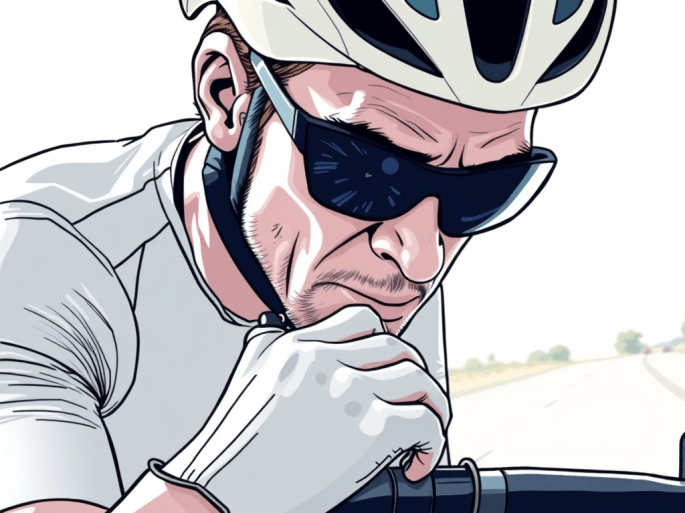
Mental toughness in cycling is not an innate trait but a learned skill. The brain, rather than the muscles, acts as a performance limiter. Understanding this allows athletes to train their minds for endurance through techniques like breaking down races, using mantras, and focusing on the process, enhancing their overall performance.
The “Perfect” Tire Pressure: More Than Just a Number?
Many cyclists mistakenly believe that harder tires equal faster rides. However, while high pressure reduces rolling resistance on smooth surfaces, it can hinder performance on uneven roads. Lower pressures allow tires to absorb bumps, maintaining momentum and conserving energy. Finding an optimal tire pressure involves using calculators and personal experimentation for better comfort and speed.
The Fickle Friend: Why Pacing by Heart Rate Can Fail You
A heart rate monitor is a common cycling tool, but it may not accurately reflect effort due to factors like cardiac drift. Instead, cyclists should consider using Rate of Perceived Exertion (RPE) and power meters for more precise training. Combining these methods offers a clearer understanding of fitness and performance improvement.
Beet Juice Ice Pops: The Coolest Endurance Booster or Just Purple Hype?
Professional cyclists are increasingly adopting beet juice ice pops for their performance benefits. These pops combine dietary nitrates, which enhance blood flow and oxygen delivery, with cooling effects that help regulate core temperature during intense efforts. This strategy is backed by science, making it a valuable addition to pre-race rituals.
Sleeping High Without a Mountain: Can Low-Tech Altitude Hacks Work?
Altitude training is essential for cyclists seeking physiological gains like increased red blood cells through hypoxia. While low-tech methods like hypoxic tents may offer benefits, their effectiveness is inconsistent and costly. Often, they disrupt sleep, negating any advantages. Serious cyclists should focus on quality training and consider actual altitude camps instead.
Cheap Aero Hacks: Are the Internet’s “Free Speed” Tips Legit?
The cycling world is obsessed with speed. We drool over professional-grade bikes, with their $3,000 deep-section carbon wheels, sleek electronic groupsets, and frames that have been painstakingly molded to cheat the wind. We are a community of marginal gains, convinced that the right piece of equipment, no matter the cost, will make us faster. But … Continue reading Cheap Aero Hacks: Are the Internet’s “Free Speed” Tips Legit?
Chamois Cream Alchemy: Do Fancy Formulas Actually Make You Faster?
The quiet hum of a road bike at dawn. The crisp air on a long descent. The sheer, unadulterated pain of a saddle sore blossoming into a full-blown crisis. If you’ve spent any serious time on two wheels, you know that the last one is a very real, and very demoralizing, threat to your ride. … Continue reading Chamois Cream Alchemy: Do Fancy Formulas Actually Make You Faster?
The Espresso Taper: Can Coffee Timing Really Boost Peak Power?
The Espresso Taper discusses the tactic of abstaining from caffeine before a race to enhance performance on race day. While caffeine can improve endurance and perceived exertion, studies show mixed results on the effectiveness of a taper. For most amateur cyclists, continued caffeine use may be more beneficial than withdrawal strategies.
The Dopamine Detox Dilemma: Rebalancing Your Brain in a Hyper-Stimulated World
Our modern world's constant digital stimulation can lead to an overstimulated brain, causing distraction, low mood, and poor focus. This post explores how relentless "dopamine hits" impact attention and motivation. It offers practical strategies for a "dopamine detox" like setting digital boundaries, embracing boredom, and reconnecting with natural rewards, promoting sustainable mental well-being and improved brain health.
Your Digital Health Footprint: Navigating Data Privacy and AI in the Quantified Self Era
This post explores how your wearable tech creates a "digital health footprint," detailing the benefits of biometric data and AI's role in analyzing it. It then critically examines who owns this intimate information, outlining security risks, ethical dilemmas like potential discrimination, and practical steps you can take to protect your privacy in the growing quantified self era.