
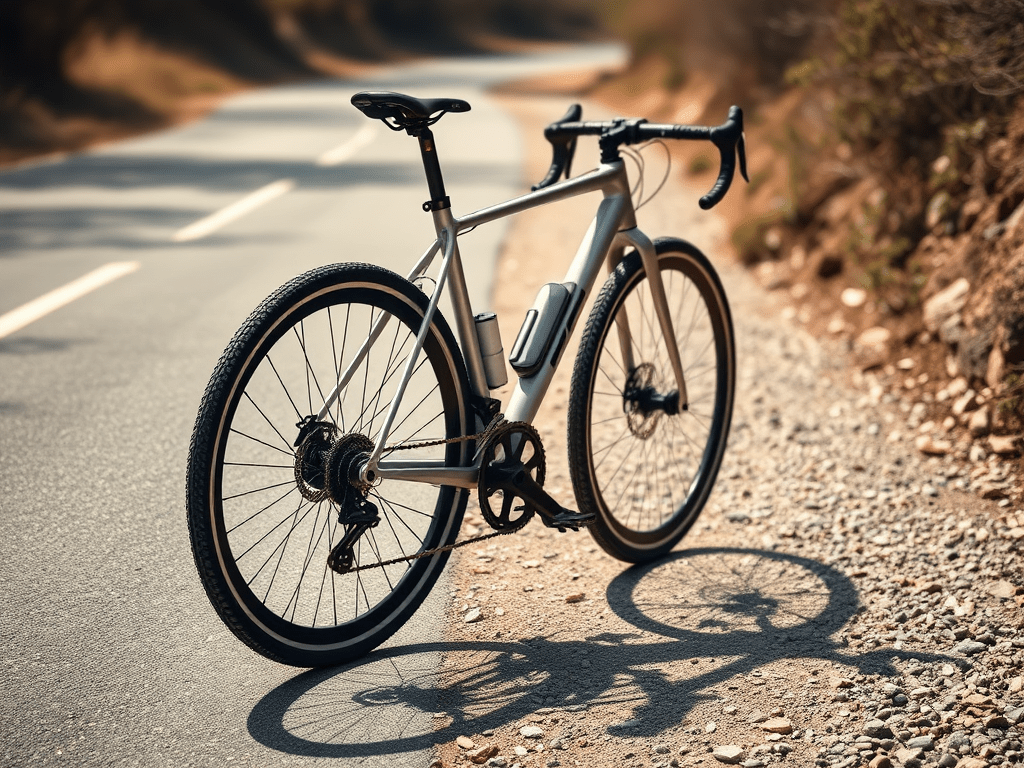
The modern cycling market loves a “quiver killer”—a single bike that can handle both pristine pavement and light gravel with equal prowess. The idea is to have one machine for every surface, saving you from the need to own a separate road bike and gravel bike. But with so many options, a simple question arises: when you’re riding a mixed-surface route, is it the frame that truly makes the difference, or is it the tires?
The myth is that to be fast on the road, you need skinny, high-pressure tires. Conversely, the thinking goes, gravel demands big, knobby tires to get any traction, which means they must be slow on the pavement. This binary thinking is a holdover from an older era of cycling and ignores the significant advancements in modern tire technology. While a racing road tire and a mountain bike tire are vastly different, the line between a modern road tire and a gravel tire is increasingly blurred.
The science behind this shift is all about rolling resistance. We’ve been conditioned to believe that a rock-hard tire rolls faster. In the past, on smooth, freshly-paved roads, this was largely true. The less your tire deforms, the less energy is lost to hysteresis (the energy lost as a tire deforms and returns to its original shape). However, the world’s roads—and even our best-paved ones—are far from perfect. When a skinny, high-pressure tire hits a small crack, a ripple, or a patch of rough asphalt, it bounces up and over the obstacle. That bounce is an energy loss.
A wider tire, run at a lower pressure, behaves differently. When it hits the same imperfection in the road, it can deform around the obstacle instead of bouncing. This action, known as tire deflection, creates a smoother ride and, more importantly, can result in lower rolling resistance on anything other than a perfect surface. That’s right—a modern, wider tire run at a lower pressure can actually be faster on the kind of roads most of us ride every day. This effect is even more pronounced when you introduce a gravel surface, where a larger contact patch and a bit of tread are crucial for both traction and speed.
This is where the distinction between a dedicated gravel tire and a road tire gets interesting. Modern gravel tires are often designed with a slick or semi-slick center tread for minimal rolling resistance on pavement, with small side knobs for cornering grip on gravel. The shift to tubeless setups has only amplified these benefits, allowing for even lower pressures and virtually eliminating the risk of pinch flats. This setup truly allows you to have a single bike that can be fast on the road and confident on the dirt.
So, how do you choose? The key is to match your tire to the terrain. For a 50/50 road and gravel route, a 32-40mm wide gravel tire with a fast-rolling center tread and a bit of side knob is an excellent choice. If you’re riding mostly gravel with just a short section of pavement, you can go wider and more aggressive. The old rule of thumb was to have a road bike for the road and a gravel bike for the gravel. But today, with the right set of tires, you can transform your “quiver killer” into a true all-road machine.
The verdict is clear: while your bike’s frame dictates its geometry and comfort, it’s the tires that are the single most impactful component you can change for different conditions. They are your first line of defense against the road, and the right rubber matters more than almost anything else. So, instead of obsessing over a new bike, consider a new set of tires. It might be the most impactful upgrade you can make.
Discover more from ABC Endurance
Subscribe to get the latest posts sent to your email.
