
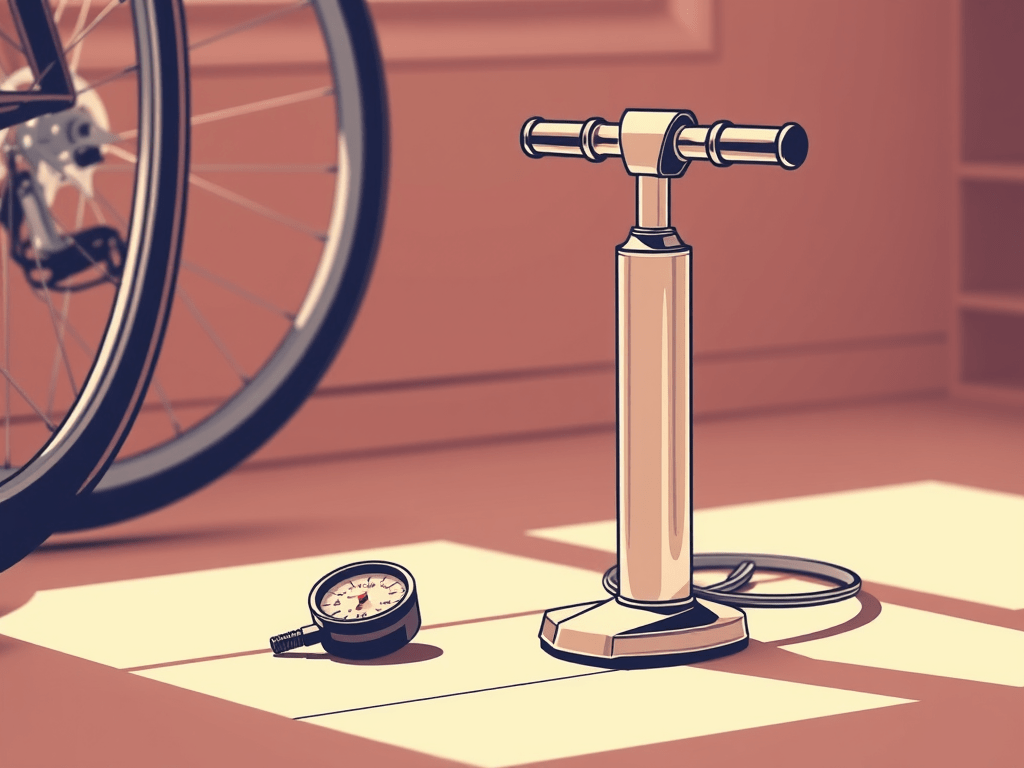
The pre-ride ritual of a cyclist is a familiar scene. We pull the floor pump off the wall, thread the head onto the valve, and watch the gauge climb. For many, this process has a single, unspoken goal: to reach the maximum PSI indicated on the tire’s sidewall. We pump until the tire feels like a rock, convinced that a rock-hard tire is a fast tire. The logic is simple—less give means less rolling resistance, and less resistance means more speed. But what if this sacred ritual is actually costing you precious watts?
The myth that “harder is always faster” is deeply ingrained in cycling culture, a relic of a time when tires were narrow and roads were smooth. While it intuitively feels correct, the physics of rolling resistance tell a more nuanced story. Rolling resistance is a measure of the energy lost when a tire deforms as it rolls over a surface. On a perfectly smooth, glass-like road, a rock-hard tire would indeed be faster. The tire wouldn’t deform, and therefore, there would be no energy loss due to this deformation, also known as hysteresis. But we don’t ride on glass. We ride on asphalt, which is full of imperfections, cracks, and bumps.
When a high-pressure tire hits a bump, it acts like a rigid, unforgiving object. It deflects upwards, forcing the entire bike and rider to lift, which absorbs valuable energy and slows you down. A lower-pressure tire, on the other hand, is more pliable. It can conform to the shape of the bump, absorbing it without lifting the bike. This simple act of tire deformation allows the bike to maintain its forward momentum with less energy expenditure. So, while you might be losing a tiny amount of energy to the internal friction of the tire itself, you are saving a much larger amount of energy by not having to lift your entire body over every imperfection in the road.
The cycling industry has embraced this understanding, leading to a massive shift in gear and philosophy. We’ve moved away from 23mm tires pumped to 120+ PSI and are now firmly in the era of wider, more comfortable, and faster tires. A 28mm or 32mm tire at a lower pressure offers a larger contact patch with the road, improving grip and comfort without a significant penalty to rolling resistance. This trend is amplified by the widespread adoption of tubeless setups, which allow for even lower pressures without the risk of a pinch flat.
So how do you find your personal sweet spot? The “perfect” tire pressure isn’t a single number, but a dynamic range tailored to your specific setup and conditions. A more precise method than simply using feel is to use a formula. Most online tire pressure calculators, like the one offered by Silca or SRAM, use a core formula that considers your total weight (rider + bike), tire width, and even the type of tire and road surface. By plugging in these specific variables, you get a personalized, data-backed recommendation for both your front and rear tires.
The key is to experiment. Try the pressure recommended by a reliable calculator on a familiar loop and pay attention to how the bike feels. You might be surprised to find that a lower, more comfortable pressure is also a faster one.
The Unreliable Gauge
Before you trust the numbers from an online calculator, you need to be sure you can actually achieve them. The dial on your average floor pump is notoriously inaccurate. These gauges are not precision instruments and can be off by several PSI, which can negate the benefits of carefully calculated pressures. For the serious amateur looking for every possible advantage, a separate, high-quality digital pressure gauge is an essential tool. These small, accurate gauges are a relatively inexpensive investment that ensures the pressure you intend to run is the pressure you’re actually running.
The verdict is clear: the perfect tire pressure is not a fixed number, but a range tailored to your specific needs. The next time you grab your pump, don’t blindly follow the number on the sidewall. Instead, use a more precise method that takes into account the road ahead, your weight, and your tires. A slightly softer, more supple tire will not only provide a more comfortable ride, but it may also give you that elusive “free speed” you’ve been looking for.
Discover more from ABC Endurance
Subscribe to get the latest posts sent to your email.
