
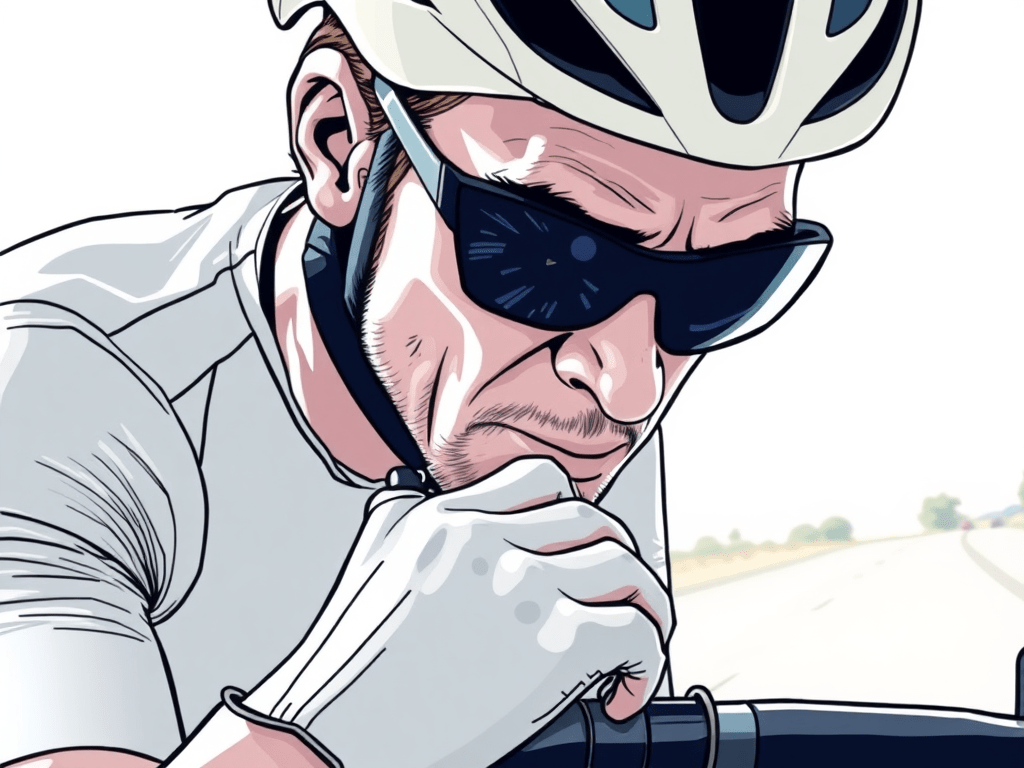
The heart rate monitor is often the first piece of technology a cyclist adds to their bike after a simple computer. For many of us, it becomes a trusted companion, a digital truth-teller that promises to keep us honest and in the “zone.” We follow training plans built around heart rate numbers, convinced that staying within the prescribed zones is the best path to improvement. On the monitor, a number flashes, telling us exactly how hard our heart is beating. But what if that number isn’t telling the whole story? What if your body is working far harder—or much easier—than your monitor suggests?
It’s easy to assume that heart rate is the ultimate, objective measure of your effort. It seems logical: the harder you work, the faster your heart beats. Therefore, a specific heart rate should correspond to a specific level of effort. We train this way and we pace ourselves this way. But as many seasoned athletes know, heart rate is a fickle friend, easily influenced by a host of factors that have nothing to do with your actual power output.
The science behind this disconnect is called cardiac drift. Simply put, it’s the phenomenon where your heart rate gradually climbs over time even though your power output remains constant. For example, on a hot day, your body is working hard to cool itself. To do this, it pushes blood to the skin, which means your heart has to beat faster to maintain the same blood flow to your working muscles. The result? Your heart rate climbs, but your power output stays the same, or even decreases. This isn’t a sign of you getting fitter; it’s a sign of physiological stress. Similarly, your heart rate can be influenced by dehydration, a lack of sleep, or even a couple of cups of coffee before a ride. On a day when you’re tired, your heart rate might be artificially low, making you think you’re working harder than you are. On another day, your pre-race nerves might elevate your heart rate, tricking you into believing you’re going harder than you should.
So if heart rate is an unreliable measure, what should you use instead? This is where the modern tools of cycling come into play. The first and most accessible alternative is RPE (Rate of Perceived Exertion). This is a subjective scale, usually from 1 to 10, where you rate how hard you feel you are working. While it may seem less scientific, it’s a powerful tool because it incorporates all the variables that affect your body on a given day—fatigue, heat, mental stress, etc. For example, your coach might tell you to ride at an RPE of 7, which you know from experience feels like a hard but sustainable pace.
The gold standard, however, is training with a power meter. A power meter measures the work you are actually doing in real-time, measured in watts. Unlike heart rate, which is a physiological response, watts are a direct, objective measure of your power output. Your power output is not affected by heat, dehydration, or a bad night’s sleep. The number you see on your bike computer is a direct reflection of the force you are applying to the pedals. This allows you to truly understand your effort and train with a precision that heart rate simply can’t match. You can set specific intervals to be done at a certain wattage, and know with certainty that you are hitting the intended intensity, regardless of what your heart rate is doing.
The evidence is overwhelming. Studies have consistently shown that power output and heart rate often diverge, especially in variable conditions. In a classic example, a cyclist might complete a 20-minute time trial. At the beginning, their heart rate might be 160 bpm and their power is 300 watts. As the effort continues, their heart rate might climb to 175 bpm while their power output remains steady at 300 watts. This cardiac drift is a common and predictable phenomenon that highlights the limitations of using heart rate as a primary pacing metric.
The verdict is clear: heart rate is a useful data point, but it’s a symptom, not the cause. It tells you how your body is responding to stress, but it doesn’t tell you the precise work you are doing. For the serious amateur cyclist, a multi-metric approach is best. Use a power meter as your primary pacing tool, rely on your RPE to fine-tune your effort based on how you feel, and use your heart rate as a secondary metric to watch for signs of fatigue, dehydration, or illness. This comprehensive approach will give you a far more accurate picture of your fitness and allow you to train with a precision that will truly get you faster.
Discover more from ABC Endurance
Subscribe to get the latest posts sent to your email.
