
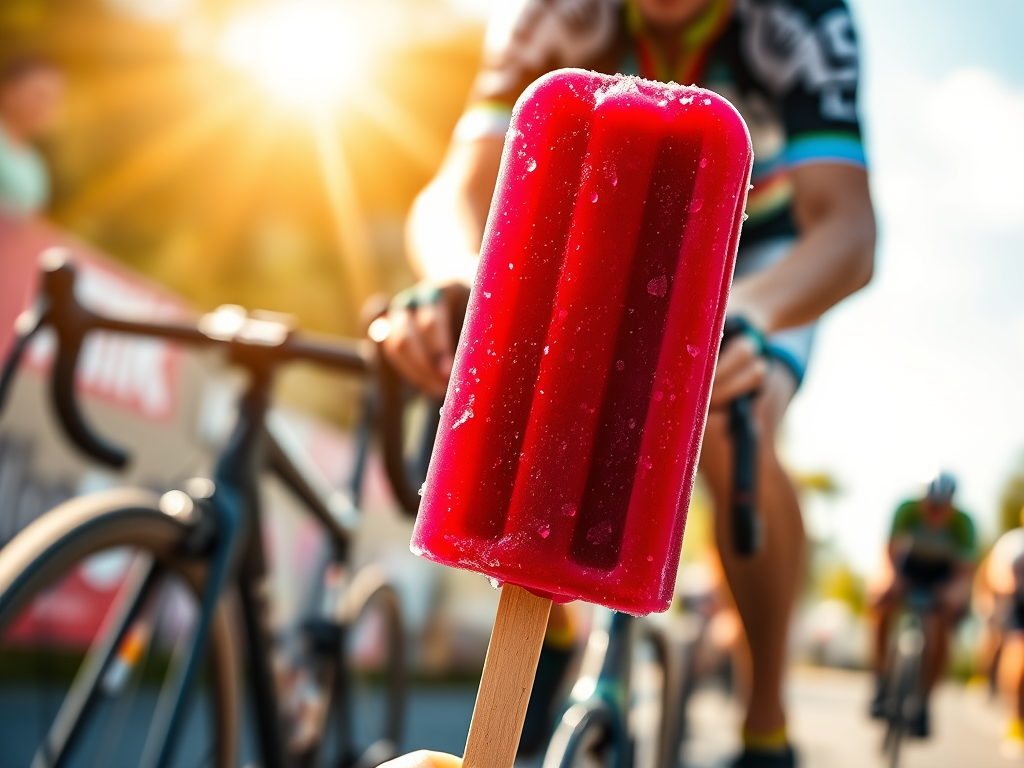
The pre-race ritual for a professional cyclist is a symphony of finely tuned details. There’s the special race-day breakfast, the perfectly-mixed bottle of carb drink, and the final check of tire pressure. But in the hushed moments before a short, intense time trial or a blistering criterium, you might spot a pro rider with a secret weapon: a small, dark-red bottle filled with a liquid that looks suspiciously like something you’d find at a farmer’s market. That liquid is concentrated beet juice, and for years, it’s been the bright-red secret of many a successful athlete. Now, the internet is buzzing with a new, even more intriguing twist on this trend: beet juice ice pops. The myth is simple and compelling—that by freezing this performance-boosting nectar, you get a double-dose of benefits: the proven physiological power of dietary nitrates and the cooling effects of a frozen treat. But is this just a delicious, quirky trend, or is there some real science behind this purple concoction?
The myth of the beet juice ice pop is a beautiful marriage of two distinct physiological benefits. It suggests that by consuming a concentrated dose of dietary nitrates in a frozen form, a cyclist can achieve a powerful synergy. The nitrates will go to work on the body’s internal machinery, while the cold will help lower core body temperature, extending the window of peak performance in the heat. It’s the perfect two-for-one deal for an athlete looking for any possible edge. But can such a simple, low-tech solution really deliver on such a grand promise? To find out, we need to separate the science of nitrates from the science of cooling, and then see if they play nicely together.
Let’s start with the vibrant, earthy magic of the beetroot itself. The key ingredient here is dietary nitrate (NO3−). When consumed, the nitrate is converted in the body into nitrite (NO2−) by bacteria in the mouth, and then into nitric oxide (NO). Nitric oxide is a powerful vasodilator, meaning it helps to widen your blood vessels. This has a profound effect on a cyclist’s performance. With wider blood vessels, blood flow is improved, and the delivery of oxygen to working muscles becomes more efficient. Essentially, your body can produce the same amount of power while using less oxygen. This is a game-changer, especially in races that demand high-intensity efforts. The science here is robust, with numerous studies showing a clear benefit in time to exhaustion and power output, particularly in sub-maximal and intense efforts lasting from a few minutes to an hour.
Now, let’s talk about the other half of the equation: cooling. It’s a well-established fact that exercise in the heat is limited by our body’s core temperature. As your core temperature rises, your body diverts blood flow to the skin to cool itself, which means less blood is available for your working muscles. This leads to a drop in performance. By consuming something cold, you can lower your core temperature from the inside out, extending the time it takes to reach a critical temperature threshold. This is why you see athletes using ice vests, cold water bottles, and even ice-cold slushies. A slushie or ice pop is particularly effective because the small pieces of ice in the mix create a large surface area for heat exchange, making them highly efficient at cooling the body from the inside.
So, when we look at the evidence, does the beet juice ice pop stand up to scrutiny? Studies on dietary nitrates have shown that a concentrated dose, often in the form of a beet juice “shot” or powder, is most effective. The ideal dose is typically around 5-9 mmol of nitrate, consumed 2-3 hours before a race. This timing is critical to allow for the conversion of nitrate to nitric oxide. What about the form it’s consumed in? Research has demonstrated that nitrate-rich foods and supplements in liquid form are effective, and there is no reason to believe that freezing them would diminish their nitrate content. In fact, a study in the Journal of the International Society of Sports Nutrition highlighted the benefits of pre-cooling with an ice slushy, showing it could significantly improve performance in hot conditions. So, in theory, a beet juice ice pop could be a brilliant two-for-one. It delivers the nitrates you need, and it provides a proven pre-cooling strategy.
While the scientific community has been busy dissecting the effects, many pro riders have already adopted beet products as part of their routine. You’ll hear stories of riders who swear by a daily shot of concentrated beet juice during a stage race, believing it helps with oxygen delivery and recovery. Others are more tactical, reserving the deep red drink for key time trials or hilly stages where every watt counts. The specific form—juice, powder, or even an ice pop—is often a matter of personal preference and what works best with their race-day fueling plan. For a rider needing to pre-cool before a hot time trial, the ice pop format could be the perfect solution, killing two birds with one stone.
Ultimately, the verdict is a resounding yes: beet juice ice pops are far more than just purple hype. The science behind both dietary nitrates and core cooling is solid, and there’s no reason to believe that combining them would be anything less than a powerful strategy. For the elite amateur cyclist, this is absolutely a trick worth adding to your race-day ritual. Unlike a lot of other performance-enhancing products, the cost is minimal (you can make your own at home), and the health benefits of beetroot are undeniable. The key is to get the dosage and timing right. Don’t just chug a bottle of beet juice right before the start line; experiment with a concentrated dose 2-3 hours beforehand, and use the frozen form as part of your pre-race cooling strategy. Whether it’s a quick-and-easy ice pop or a beet juice slushy, this is one endurance booster that’s both cool and scientifically sound.
Discover more from ABC Endurance
Subscribe to get the latest posts sent to your email.
