
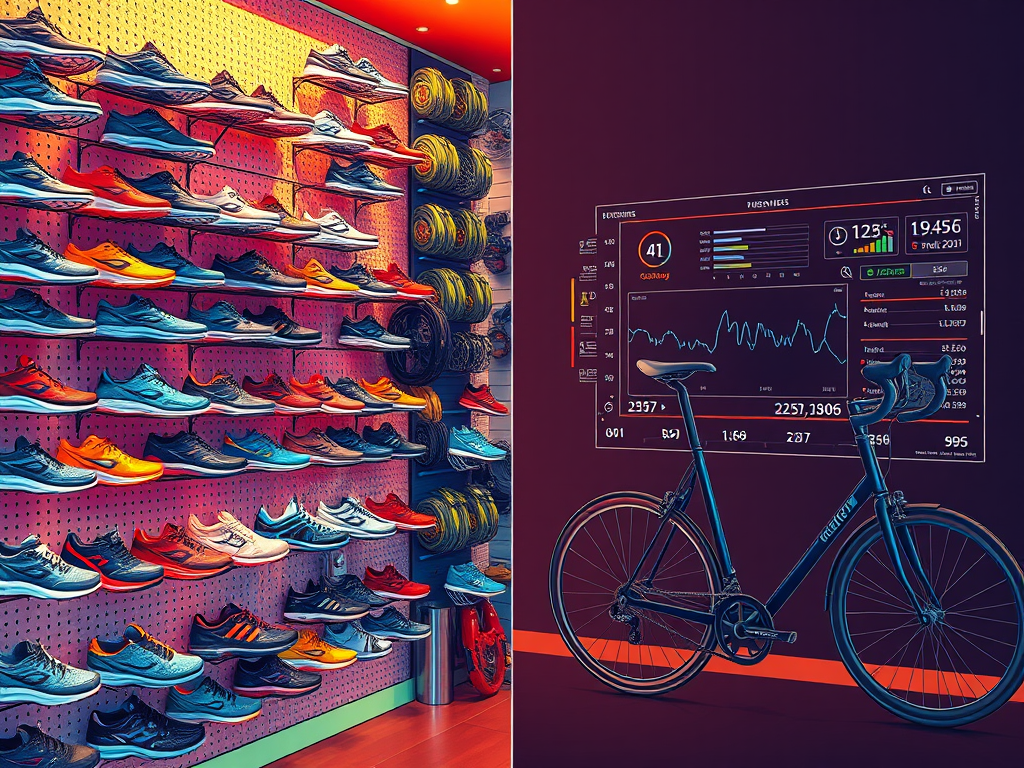
You stand in front of a dazzling wall of running shoes, each promising revolutionary cushioning or unparalleled speed. Or perhaps you’re Browse endless cycling components online – handlebars, saddles, cranks – wondering which one is truly right for your body and your goals. The sheer volume of gear choices for endurance athletes can be overwhelming, leading to analysis paralysis and, often, costly mistakes.
Choosing the right gear is absolutely critical for performance, comfort, and, perhaps most importantly, injury prevention. Yet, historically, these decisions have relied heavily on trial-and-error, subjective reviews from online forums, or generic advice that might not apply to your unique physiology. This often leads to uncomfortable rides, inefficient strides, or even nagging injuries from ill-fitting equipment, forcing you to spend more money on replacements or medical attention.
Enter the new frontier of AI gear optimization platforms. Imagine having your “personal equipment consultant,” a sophisticated system that analyzes your unique biomechanics, performance data, body metrics, and even environmental conditions to recommend the perfect fit and specifications for your needs. These aren’t just product filters; they are intelligent tools designed to bridge the gap between endless options and your optimal gear setup.
AI helps amateur athletes make informed gear decisions, improving comfort, enhancing performance, reducing injury risk, and ultimately saving money by avoiding unsuitable purchases. This post will explore how AI is simplifying gear selection for endurance athletes, offering personalized recommendations for shoes, bike fit, apparel, and more, based on individual biometric and performance data.
The Gear Dilemma: Costly Mistakes and Missed Potential
The allure of new gear is undeniable, but the reality of choosing correctly is often frustrating.
- Overwhelming Options: For a single category like running shoes, dozens of brands offer hundreds of models, each with different support levels, cushioning types, and intended uses. The same applies to cycling components, wetsuits, or even apparel.
- The Cost of Wrong Choices: A poorly fitted pair of running shoes can lead to plantar fasciitis or knee pain. An incorrectly set up bike can cause back discomfort, numbness, or loss of power. These mistakes not only diminish your enjoyment and performance but also hit your wallet hard, forcing you to buy replacements or seek professional help.
- Subjectivity vs. Objectivity: Much of traditional gear selection relies on “feel” or reviews from individuals with different body types and needs. What works for a professional athlete might be entirely wrong for a recreational enthusiast.
Poorly chosen gear can directly lead to discomfort, inefficiency, and, most critically, injury. An inefficient stride due to unsupportive shoes wastes energy, while an improper bike fit can create hot spots, nerve compression, or excessive strain on joints.
AI’s Intelligent Gear Matching: Your Data-Driven Solution
This is where AI’s ability to process complex data and identify patterns becomes invaluable. AI platforms can become your intelligent gear matcher by:
- Comprehensive Data Input: AI processes a rich tapestry of personal information to build a holistic profile of your needs. This includes:
- Biometric Data: Detailed body dimensions, weight, height, and flexibility.
- Performance Data: Your typical power output zones (from cycling power meters), average running pace, mileage, and training zones.
- Biomechanics Data: Crucially, this involves dynamic analysis. For runners, it’s foot strike patterns, pronation levels, cadence, vertical oscillation, and ground contact time (often captured by advanced running sensors like those from Stryd or through video analysis apps like Ochy). For cyclists, it’s pedal stroke analysis, joint angles (hip, knee, ankle), and saddle pressure.
- Past Injury History: Learning from your previous vulnerabilities.
- Preferred Terrain & Goals: Do you primarily run on roads, trails, or a mix? Are you aiming for speed, endurance, or comfort?
- Environmental Conditions: Anticipated temperature, humidity, and wind conditions for races, which can influence apparel choices.
- Advanced Biomechanics Analysis: AI can analyze your movement patterns with incredible precision to suggest the most appropriate gear specifications.
- Running Form: By processing video of your running gait or data from footpods, AI can identify if you overpronate, supinate, or have a neutral foot strike, and recommend shoe types accordingly (e.g., stability shoes for overpronators). It can also suggest shoe cushioning levels based on your ground contact time and vertical oscillation to optimize shock absorption and energy return. Companies like Aetrex use 3D foot scans combined with AI (FitGenius) to recommend shoes based on unique foot profiles, helping both retailers and online shoppers find the perfect fit. ARION also offers AI-powered shoe recommendations based on real-time gait analysis.
- Cycling Biomechanics: For cyclists, AI-powered bike fitting platforms can analyze video of your pedal stroke and body angles on the bike. Tools like MyVeloFit allow you to upload videos of yourself on a trainer, and their AI analyzes your joint angles (hip, knee, ankle, shoulder, elbow) to provide precise recommendations for saddle height, fore/aft position, handlebar reach, and cleat placement to optimize power transfer, comfort, and injury prevention.
- Apparel for Conditions: AI can use your typical body temperature regulation, sweat rate, and the forecasted weather for your event to recommend the optimal layering system or fabric types for maximum comfort and performance.
- Personalized Recommendations: The AI synthesizes all this data to provide highly personalized, actionable recommendations.
- Scenario (Running Shoes): “Based on your slight overpronation, average cadence of 170 SPM, and primary road mileage of 40 miles/week, we recommend the [Specific Shoe Model A] or [Specific Shoe Model B] for optimal stability and cushioning.”
- Scenario (Bike Fit): “Your current saddle height is leading to excessive knee extension at the bottom of your pedal stroke. Adjust your saddle up by 5mm and move it forward by 3mm for better power transfer and reduced knee strain.”
- Scenario (Race Day Apparel): “For your upcoming race with a forecasted temperature of 60°F, 80% humidity, and light rain, we recommend a lightweight, moisture-wicking base layer with a breathable, water-resistant shell and lightweight gloves.”
- Basic Performance Simulation: While still evolving, some AI systems might offer basic estimations of performance gains from different equipment choices. For example, by analyzing your power output and aerodynamics, an AI could theoretically suggest the potential time savings from upgrading to a more aerodynamic helmet or wheels.
Leveraging AI for Smart Gear Choices: Practical Steps
Integrating AI into your gear selection process is about smart utilization:
- Identify Relevant Tools: Look for apps or services that specialize in biomechanical analysis or leverage vast gear databases with AI matching. For running, consider services that integrate with footpods or utilize video gait analysis. For cycling, explore online bike fitting platforms that use AI-driven motion capture.
- Provide Accurate Data: The effectiveness of AI hinges on the quality of its input. Be meticulous and honest when entering your body dimensions, training habits, and any past injury history. If the tool requires video, ensure it’s captured clearly and according to instructions.
- Combine with Expert Fitters: AI is a powerful starting point and an excellent tool for iterative adjustments, but it’s not always a complete replacement for a hands-on, experienced professional fitter, especially for complex bike fits or persistent biomechanical issues. View AI as a highly intelligent pre-screener and ongoing optimizer that complements, rather than fully replaces, human expertise. A great AI recommendation can help you walk into a bike shop with specific parameters, making the in-person fitting even more efficient.
Your Perfect Fit, Powered by Data
The days of haphazardly choosing gear are giving way to a new era of personalized, data-driven decisions. AI is simplifying gear selection for endurance athletes, transforming it from a frustrating guessing game into a precise, informed process. By offering tailored recommendations for shoes, bike fit, apparel, and more, based on your unique biometric and performance data, AI ensures you’re equipped for optimal comfort, performance, and injury prevention.
Looking ahead, AI might integrate even more deeply with 3D body scanning technologies, creating exact digital twins of your physique for hyper-personalized gear recommendations, or allowing you to “try on” virtual apparel to see how it fits your unique body shape.
It’s time to stop making costly gear mistakes. Embrace AI tools to find the perfect equipment that truly matches your unique body and performance needs. Gear up smarter, perform better, and enjoy every mile.
Discover more from ABC Endurance
Subscribe to get the latest posts sent to your email.
