
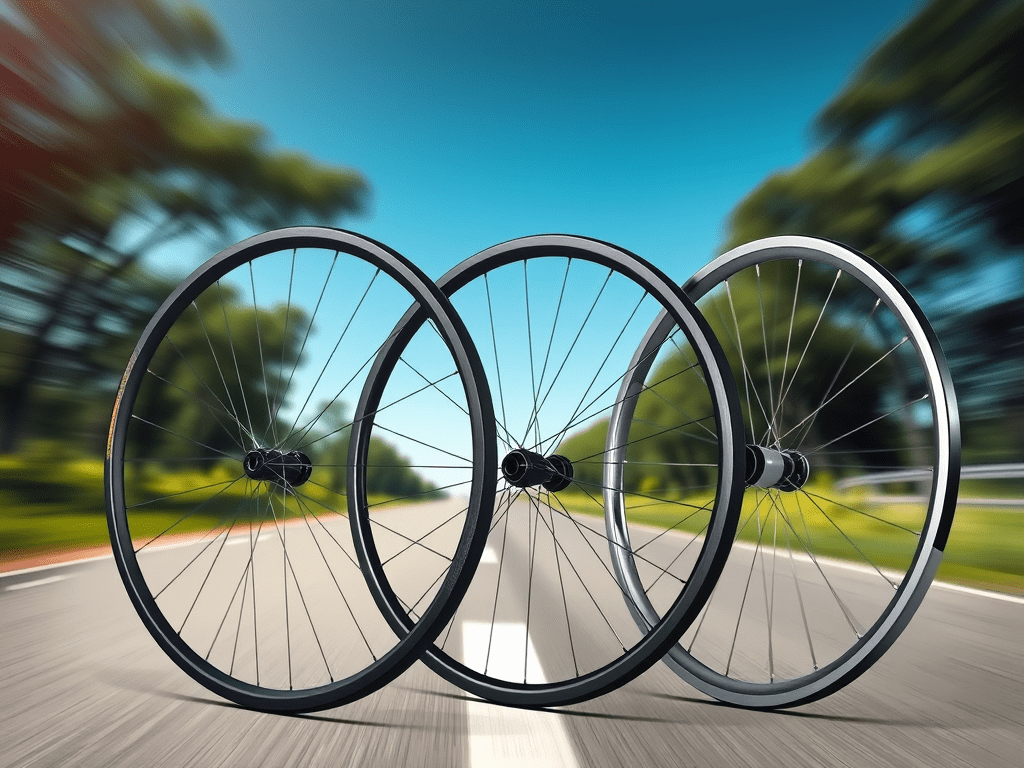
They’re the spinning heart of your bicycle, the components that connect your power to the pavement, and often, the most lusted-after upgrade. We’re talking about wheels. That gleam of deep-section carbon, the promise of “free speed” slicing through the wind – it’s an allure few cyclists can resist. But for endurance riders, whose adventures stretch over many hours and miles, is it all about raw speed and bling? Or do factors like comfort, stability, durability, and reliability play an even more critical role?
Here at ABC Endurance, we know that choosing the right wheelset can transform your ride, but it’s about finding the optimal blend for long-distance performance and practicality. So, we’re pitting three distinct wheelset philosophies against each other: the wind-cheating Carbon Deep Section, the versatile Carbon Mid-Depth, and the steadfast Premium Alloy. Your wheel choice is crucial: it impacts Peaking by influencing aerodynamics and weight; it aids Injury Prevention through comfort and stable handling that reduces fatigue; and it bolsters your Mental Game with the confidence that comes from reliable, high-performing equipment.
Wheel Anatomy 101: What Makes a Wheel Fast, Comfortable, or Stable?
Before diving into the comparison, let’s quickly touch on key wheel characteristics:
- Aerodynamics: Deeper and specially profiled rims reduce wind drag, saving you watts, especially at higher speeds.
- Weight: Lighter wheels, particularly at the rim (rotational weight), accelerate faster and feel more sprightly on climbs.
- Stiffness: Good lateral (side-to-side) and torsional (twisting) stiffness ensure efficient power transfer and precise handling.
- Comfort & Vibration Damping: The rim material (carbon often damps vibration better than alloy) and, crucially, wider internal rim widths allow for wider tires at lower pressures, dramatically improving comfort.
- Durability: The wheel’s ability to withstand rough roads and sustained use.
- Crosswind Stability: Deeper rims can be more challenging to handle in side winds.
- Braking: Disc brakes are now standard on most performance road bikes, offering consistent power in all conditions. Rim brake performance varies, especially with carbon rims in wet weather.
- Hubs: Quality hubs offer smooth bearings, quick engagement, and durability.
The Wheelset Contenders: Profiles in Speed and Endurance
- The Aero Weapon: Carbon Deep Section Wheels (50mm+ depth)
- Characteristics: Maximum aerodynamic advantage is their calling card. Often very stiff.
- Intended Use: Best for flat to rolling terrain where holding high speeds is key (e.g., time trials, fast flat road races, or for riders who simply love the aero look and feel).
- Price Tier: Typically high to very high.
- The All-Rounder Ace: Carbon Mid-Depth Wheels (35mm-48mm depth)
- Characteristics: The sweet spot for many, offering a good balance of aerodynamic benefits, manageable weight, and predictable handling.
- Intended Use: Highly versatile for all types of terrain, from flatlands to significant climbs. A popular choice for gran fondos, general endurance riding, and amateur road racing.
- Price Tier: Mid to high.
- The Unsung Hero: Premium Alloy Wheels
- Characteristics: Often feature wider internal rim widths for better tire profiles and comfort. Can offer excellent ride quality, robustness, and predictable braking (especially for rim brake users). Best overall value.
- Intended Use: Ideal for training, all-weather riding, rough roads, winter bikes, or for the budget-conscious cyclist seeking reliable performance.
- Price Tier: Low to mid.
The Performance Showdown: Comparing Across Key Endurance Metrics
How do these wheel types stack up when the rides get long?
- Aerodynamic Efficiency (The “Free Speed” Factor):
- Deep Section: Offers the most significant watt savings at higher speeds (typically above 20-22 mph). The faster you go, the more they help.
- Mid-Depth: Provides a noticeable aerodynamic advantage over shallow alloy rims, making it easier to maintain speed. A great balance for varied pacing.
- Premium Alloy: Generally the least aerodynamic, though modern designs with wider, slightly more aero profiles are better than older box-section rims.
- Weight & Climbing Ability (The “Gravity Defiance” Test):
- Deep Section: Usually the heaviest of the three due to the extra material. Can feel a bit sluggish on prolonged, steep climbs.
- Mid-Depth: Hits a good balance. Light enough to feel responsive and enjoyable on climbs while still offering aero benefits elsewhere.
- Premium Alloy: Can be surprisingly lightweight, sometimes rivaling or even beating heavier carbon clinchers. Excellent for climbing on a budget.
- Crosswind Handling & Stability (The “Gust Test”):
- Deep Section: Most susceptible to being pushed around by side winds. Requires more rider input and confidence, especially for lighter riders.
- Mid-Depth: Far more manageable in crosswinds. Modern U-shaped profiles have greatly improved stability over older V-shapes.
- Premium Alloy: Generally the most stable and confidence-inspiring in gusty conditions due to their shallower profiles.
- Comfort & Vibration Damping (The “Long Ride Feel” Test): While carbon fiber itself has inherent vibration damping properties, the biggest factor here is often the ability to run wider tires at lower pressures.
- Deep & Mid-Depth Carbon: Modern carbon rims usually have wider internal widths, promoting better tire shape and allowing lower pressures for a smoother ride and better grip.
- Premium Alloy: Many premium alloy wheels also feature wider internal widths, delivering excellent comfort when paired with 28mm or wider tubeless tires.
- Durability & Serviceability for the Long Haul:
- Carbon: Very strong, but a significant impact can lead to catastrophic failure that’s often irreparable. Proprietary spokes or internal nipples on some aero wheels can make truing more complex.
- Alloy: More likely to dent from an impact (which can sometimes be ridden out or repaired) rather than crack catastrophically. Standard spokes are common, making repairs easier and cheaper.
- Braking Performance: With disc brakes becoming the norm, performance is excellent and consistent across all wheel materials in all weather. If you’re on rim brakes: alloy rims offer superior and more predictable braking, especially in the wet, compared to most carbon rim brake surfaces (which require carbon-specific pads and can be inconsistent in rain).
- Overall Value & Cost-Benefit for Endurance:
- Is the potential 10-20 watt saving of a deep-section carbon wheelset (at specific speeds) worth $1500-$2500 for a non-professional endurance rider, compared to a $500-$800 premium alloy set that might be more comfortable and durable? This is a key consideration.
The Podium Decision: Best Hoops for Your Endurance Quest
- Carbon Deep Section:
- Pros: Maximum aerodynamic speed on flatter terrain.
- Cons: Highest cost, heaviest, can be challenging in crosswinds.
- Verdict: Best for speed-focused riders on predominantly flat/rolling courses in calmer conditions, or for specific competitive events where every second counts. Generally less ideal as an everyday all-rounder for endurance.
- Carbon Mid-Depth:
- Pros: Excellent balance of aerodynamics, weight, handling, and often comfort. The “quiver killer” for many.
- Cons: Still a significant financial investment.
- Verdict: Often the sweet spot for most endurance cyclists seeking a noticeable performance upgrade that handles well in varied conditions and offers a good dose of speed and comfort.
- Premium Alloy:
- Pros: Best overall value; often very durable; can offer excellent ride quality and comfort (especially wider, tubeless-ready versions); predictable braking (for rim brake users).
- Cons: Less aerodynamic than carbon options; can be slightly heavier than comparable-depth carbon.
- Verdict: A fantastic choice for training, all-weather riding, tackling rougher roads, riders on a tighter budget, or those who prioritize bombproof reliability and practicality over marginal aero gains.
Consider Your Context: Your budget is paramount. Then, think about your typical terrain (flat, hilly, mountainous?), your average speed, how much you value aerodynamic gains versus weight savings or comfort, and whether your bike uses disc or rim brakes. Tubeless compatibility is a big plus for endurance, offering lower pressures, more comfort, and puncture protection across all wheel types.
Spin Smart, Ride Strong, Choose Your Weapon Wisely
Upgrading your wheelset is a significant investment, so aligning your choice with your primary riding style, goals, and budget is crucial. While the allure of carbon is strong, don’t discount the incredible performance and value offered by modern premium alloy wheels, especially for the diverse demands of endurance cycling.
And remember, regardless of your wheel choice, pairing them with high-quality tires run at the appropriate pressures will have an equally massive impact on your speed, comfort, and overall ride experience.
What wheels are you rolling for your long rides? Carbon or alloy, deep or shallow? Share your experiences and what makes them great (or not-so-great) for your endurance cycling adventures in the comments below!
Discover more from ABC Endurance
Subscribe to get the latest posts sent to your email.
