
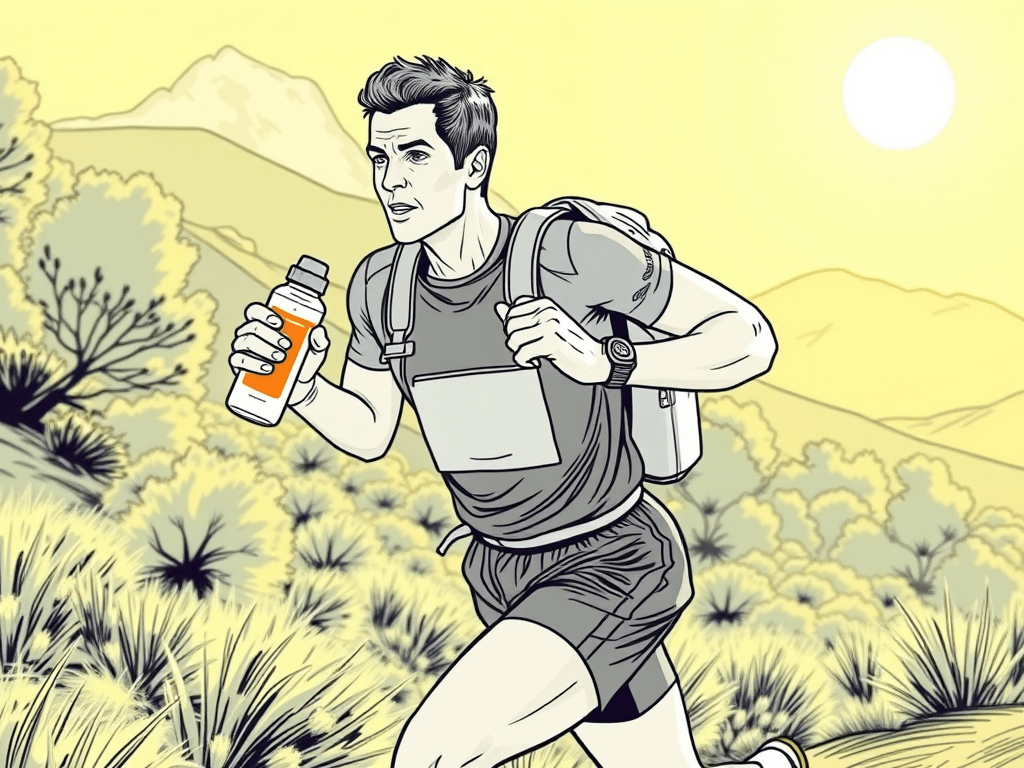
It happens suddenly, insidiously. One minute you’re cruising, feeling strong, ticking off the miles. The next? Your legs feel like they’re wading through wet cement. Dizziness swirls, your power evaporates, and a profound, bone-deep fatigue washes over you. Maybe your mood plummets, or you feel strangely cold. You’ve just met “The Bonk,” also known as “hitting the wall,” and it’s every endurance athlete’s nemesis.
Bonking isn’t a sign of weakness or lack of willpower; it’s your body screaming that its readily available fuel tank – glycogen – is empty. The good news? It’s largely preventable. Here at ABC Endurance, we know that mastering your fueling strategy is just as critical as your physical training. It’s not just about eating; it’s about strategically supplying your body with the right energy, in the right amounts, at the right times, to keep your engine humming from start to finish. Get your fueling right, and you’ll perform better, recover faster, train more consistently, and finally banish the bonk monster for good.
Fueling Science 101: What Your Hard-Working Body Needs
Let’s keep this simple. Think of your body like a high-performance car:
- Carbohydrates (The Premium Gasoline): This is your body’s preferred, most efficient fuel source for moderate to high-intensity exercise. You store carbs as glycogen in your muscles and liver, but these tanks are relatively small – enough for maybe 60-90 minutes of hard effort. That’s why you need to top them up before and replenish during longer activities.
- Simple Carbs (sugars, gels, sports drinks) provide quick energy – great for during and immediately after workouts.
- Complex Carbs (oats, whole grains, starchy vegetables) release energy more slowly – ideal for meals before training and throughout the day.
- Hydration (The Coolant & Oil): Water is vital! It helps regulate body temperature (cooling you down via sweat), transports nutrients (like carbs) to your muscles, and removes waste products. Even mild dehydration (losing just 2% of body weight) can significantly impair performance, increase your perceived effort, and raise your risk of heat stress.
- Electrolytes (The Spark Plugs): When you sweat, you don’t just lose water; you lose crucial minerals called electrolytes – primarily sodium, but also potassium, magnesium, and calcium. These are essential for nerve function, muscle contractions (preventing cramps!), and maintaining proper fluid balance. Replacing them, especially sodium during long or hot sessions, is key.
- Protein & Fat (The Support Crew):
- Protein: While not a primary fuel during exercise, it’s crucial for muscle repair and rebuilding after your workout.
- Fat: Your body uses fat for fuel, especially during lower-intensity, longer efforts. While important for overall health, deliberately consuming fat during a race isn’t usually a primary fueling strategy, as carbs are more efficient at higher intensities.
Phase 1: Pre-Fueling – Topping Off the Tank
Your fueling strategy starts long before your watch does.
- The Night(s) Before (Key Events/Long Workouts): Think “carb emphasis,” not just “carb gorge.” Aim to increase the percentage of carbohydrates in your meals for 1-3 days leading up, focusing on familiar, easily digestible complex carbs (pasta, rice, potatoes, oatmeal). Don’t drastically increase overall calories or try exotic new foods. Stay well-hydrated.
- Race/Workout Morning (2-4 Hours Prior): Your goal is a carb-rich, easily digestible meal that tops off liver glycogen stores without sitting heavily in your stomach. Aim for low fiber and low fat.
- Examples: Oatmeal with banana and maple syrup, toast with jam or honey, plain bagel, rice cakes with banana, a sports drink if solid food is tough.
- Continue sipping water or an electrolyte drink.
- The Final Hour: If you ate 3-4 hours prior, a small, easily digestible carb snack about 30-60 minutes before the start can provide a final boost.
- Examples: Half an energy bar, a few energy chews, a small banana, or an energy gel (sip water with it!). Take final sips of fluid/electrolytes.
Phase 2: During-Fueling – Keeping the Engine Running (Efforts > 90 Mins)
This is where many athletes falter. Don’t wait until you’re hungry or thirsty!
- The Golden Rules:
- Start Early: Begin taking in fuel within the first 45-60 minutes. Don’t wait for hunger signals.
- Be Consistent: Aim for small, regular sips of fluid and bites of fuel. Think “drip feed,” not “big gulp.” (e.g., Fluid every 15-20 mins, calories every 30-45 mins).
- How Much? (General Guidelines – Practice to Personalize!):
- Carbohydrates: Aim for 30-60 grams per hour. Highly trained athletes in very long events (ultras, Ironman) might push towards 90g/hr, but this often requires specific gut training. Start at the lower end and see what your stomach tolerates. (Check nutrition labels: a typical gel has ~20-25g carbs).
- Fluids: Highly individual! Depends on sweat rate, heat, humidity. A rough starting point is 16-24 oz (approx. 500-750 ml) per hour. Monitor urine color (pale yellow is good) and weight loss post-exercise (aim for <2% loss).
- Electrolytes (Especially Sodium): Crucial for events over 2-3 hours or in hot conditions. Sports drinks contain electrolytes, but you might need extra via electrolyte tabs/capsules or salty snacks (pretzels). Sodium targets can range from 300-600mg per hour, sometimes more.
- What to Consume? Find Your Favorites:
- Sports Drinks: Convenient combo of carbs, fluids, and electrolytes.
- Energy Gels/Chews: Concentrated, portable carbs. ALWAYS take gels with water to aid absorption and avoid stomach upset. Chews offer a different texture.
- Energy Bars: More solid, good for lower intensity or very long events (cycling, hiking). Choose easily chewable/digestible options.
- Real Food: Bananas, boiled potatoes (salted), pretzels, dates, fig bars, PB&J squares (crusts off!). Great for variety, but practice tolerance!
- THE CARDINAL RULE: Practice. Practice. Practice. Never, EVER try anything new on race day! Not a new gel flavor, not a different sports drink, not a food you haven’t used in training under similar conditions. Your gut needs training just like your muscles. Find what works for you and stick to it.
Phase 3: Post-Fueling – The Recovery & Repair Shop
You crossed the line – fantastic! But the fueling job isn’t quite done. Replenishing efficiently now speeds up recovery and reduces muscle soreness.
- The 3 R’s: Refuel (glycogen), Rehydrate (fluids/electrolytes), Repair (muscle tissue).
- The Critical Window: Aim to get in carbs and protein within 30-60 minutes post-exercise when your muscles are most receptive to nutrient uptake.
- The Ideal Ratio: A ratio of 3:1 or 4:1 Carbohydrates to Protein is often recommended for optimal glycogen replenishment and muscle repair initiation.
- Recovery Fuel Examples: Chocolate milk (the classic!), a fruit smoothie with protein powder or Greek yogurt, Greek yogurt with berries and granola, a turkey sandwich on whole wheat, scrambled eggs with toast.
- Keep Hydrating: Continue sipping water or electrolyte drinks over the next few hours to fully replace fluid losses.
Fuel Smart, Perform Strong, Finish Happy
Fueling for endurance isn’t complicated, but it is strategic. It’s a continuous cycle: prepare before, sustain during, and recover after. While the guidelines provide a starting point, the real key is individualization. What works perfectly for your training partner might send your stomach into knots. Use your training sessions as experiments. Keep a log. Note what you ate/drank, when, and how you felt. Over time, you’ll dial in the perfect fueling plan for your unique physiology and event demands.
Master your fueling, and you’ll unlock a new level of performance and enjoyment in your endurance journey. Say goodbye to the bonk and hello to stronger finishes!
What’s your go-to race fuel? Got any fueling questions or hard-earned tips to share? Drop them in the comments below – let’s learn from each other!
Discover more from ABC Endurance
Subscribe to get the latest posts sent to your email.
