
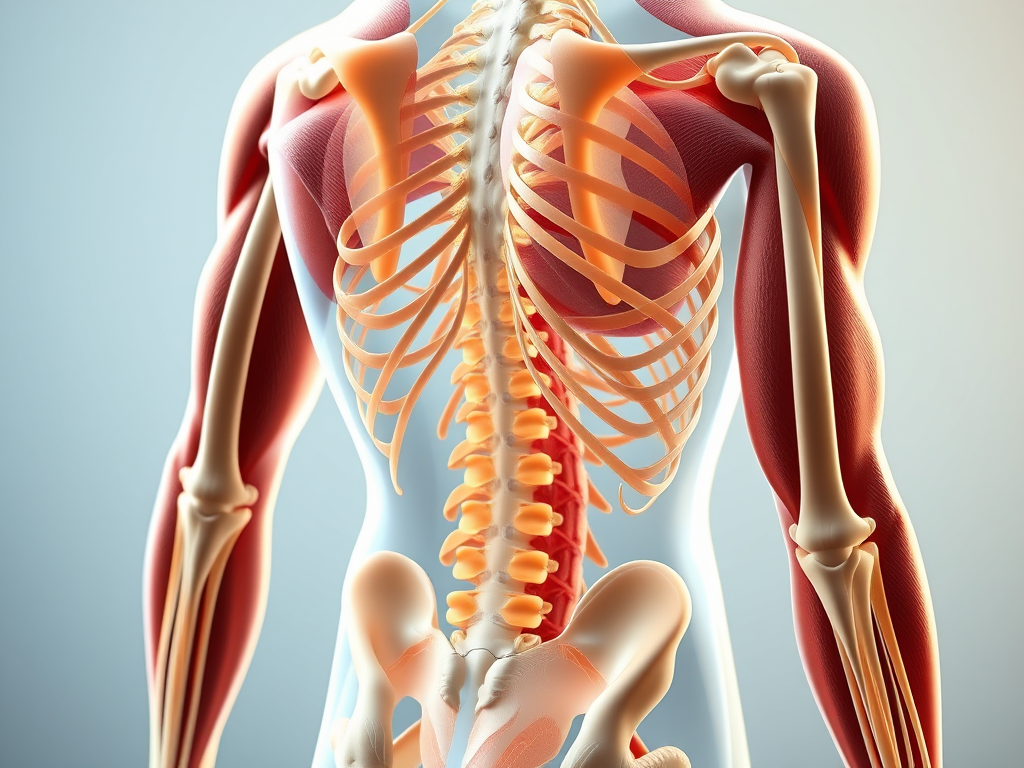
We spend a considerable amount of time focusing on the individual components of our athletic bodies: strengthening specific muscle groups, enhancing the mobility of our joints, ensuring our bones are dense and resilient. We stretch our hamstrings, foam roll our quads, and work on hip flexor mobility. But what about the intricate, pervasive web that connects all of this? What about the tissue that surrounds every muscle fiber, encases every organ, holds our bones together, and provides a continuous three-dimensional matrix throughout our entire form? This is fascia, and while often overlooked in the traditional focus on muscles and bones, it plays a profoundly crucial role in our flexibility, our overall mobility, and perhaps most importantly for endurance athletes, our ability to prevent injury.
It turns out, you can have incredibly strong muscles and mobile joints, but if your fascial system is restricted or unhealthy, you’re essentially trying to operate a high-performance machine that’s bound up in places. Understanding the vital functions of fascia, and implementing strategies to keep this integrated network healthy, is not merely supplementary; it’s essential for optimizing the efficiency of your movement, expanding your range of motion, and significantly reducing your risk of falling prey to the common overuse injuries that plague runners and cyclists.
What is Fascia? The Body’s Integrated Network
So, what precisely is this ubiquitous tissue? Fascia is a type of connective tissue, primarily composed of tough but flexible collagen fibers interwoven with elastic elastin fibers. But here’s the key point, and what makes it so significant: it’s not just isolated sheets or bands. It’s a continuous, interconnected web that runs throughout your entire body. Think of it less like individual pieces wrapping muscles, and more like a three-dimensional, full-body suit made of incredibly strong and resilient material, permeating everything.
This pervasive network gives fascia unique properties. It’s strong, providing vital support and structural integrity. It has some elastic recoil, allowing it to stretch and return to its original shape, which is crucial for movement. And because it’s so interconnected, tension or restriction in one area can, and often does, impact seemingly unrelated parts of the body.
Functions of Fascia for Athletes: More Than Just Wrapping
Given its pervasive nature, fascia performs numerous vital functions for athletes:
- Connects and Supports: At the most basic level, fascia literally holds everything together. It provides structural integrity, supporting and encasing muscles, organs, bones, and even nerve fibers, maintaining their position and shape.
- Transmits Force: This is an area of increasing understanding. Fascia isn’t just a passive wrapper; it plays a significant role in transmitting forces generated by your muscles across joints. It acts like a series of tension cables, contributing to efficient movement patterns and helping to generate power by allowing muscles to work synergistically.
- Provides Proprioception: Fascia is richly innervated with nerve endings, more so than muscles in some areas. These nerve endings provide crucial sensory information to your brain about the position and movement of your body in space. This contributes significantly to your proprioception – your sense of where your limbs are without looking – which is vital for balance, coordination, and efficient movement. This is where the fascial system ties into that broader sensory awareness we’ve discussed.
- Reduces Friction: Healthy, well-hydrated fascia has a smooth, slippery quality. This allows muscles and other tissues to glide smoothly over each other as you move, reducing friction and preventing irritation that can lead to inflammation and pain.
Fascia and Mobility/Flexibility: The Restriction Connection
When fascia is healthy, it’s pliable, elastic, and allows for smooth movement. However, when it becomes tight, restricted, or “sticky,” its properties change. This is where the direct link to mobility and flexibility becomes apparent. Tight fascia can significantly limit your range of motion around joints, making you feel stiff and restricted. What might feel like persistent muscle tightness could, in fact, be a restriction in the fascial network that surrounds and connects those muscles. Imagine that full-body suit getting tight and rigid in one area – it pulls on the surrounding areas, limiting your ability to move freely.
Fascia and Injury Prevention: A Crucial Protective Layer
This is perhaps where understanding fascia is most impactful for endurance athletes. Healthy, pliable fascia acts as a crucial protective layer and contributes significantly to injury prevention:
- Load Distribution: During repetitive movements like running and cycling, significant mechanical stress and strain are placed on the body. Healthy fascia helps to evenly distribute these forces across muscles, tendons, and joints. This prevents excessive load from concentrating on a single point, which can be a common cause of overuse injuries.
- Reduced Friction: By facilitating the smooth gliding of tissues, healthy fascia prevents the irritation and inflammation that can arise when tissues rub against each other, a common precursor to conditions like tendonitis or bursitis.
- Improved Movement Patterns: Optimal fascial health allows for more fluid, efficient, and less compensatory movement patterns. When your fascial system is functioning well, your body moves as an integrated unit, reducing unnecessary stress on the musculoskeletal system and lowering the risk of injury.
Conversely, restricted fascia significantly contributes to injury risk:
- It can create excessive tension on muscles, tendons, ligaments, and joints, making them more vulnerable to strains, sprains, and tears.
- It can alter natural movement patterns, forcing your body to compensate in ways that place undue stress on certain areas, leading to imbalances and overuse injuries.
- It can limit range of motion, increasing the risk of acute injuries when tissues are suddenly stretched beyond the capacity allowed by the restriction.
We see the consequences of restricted fascia commonly in endurance athletes in areas like tight IT bands (contributing to knee pain), restricted calves (impacting ankle and foot mechanics), tight hip flexors (affecting posture and stride length), and issues with the plantar fascia in the foot.
Strategies for Optimizing Fascia Health: Keeping the Web Healthy
So, how do we maintain the health and pliability of this vital connective tissue network?
- Targeted Stretching: Incorporate both dynamic stretches (movements that take your joints through their full range of motion before a workout) and static stretches (holding a stretch for a period after a workout) that specifically target the areas prone to fascial restriction in runners and cyclists, such as the hips, hamstrings, calves, and IT bands.
- Foam Rolling and Self-Massage: These techniques involve applying pressure to fascial tissues using tools like foam rollers, massage sticks, or lacrosse balls. The aim is to release restrictions, improve blood flow, and restore the tissue’s natural elasticity. Use slow, sustained pressure on tender areas.
- Myofascial Release Therapy: Consider seeking professional help from a qualified physical therapist, massage therapist, or myofascial release therapist. They can use hands-on techniques to address deeper and more stubborn fascial restrictions.
- Movement Variety and Cross-Training: Avoiding repetitive stress is key. Incorporating different types of movement through cross-training (such as swimming, strength training, yoga, or hiking) helps to load your fascia in varied ways, preventing the development of restrictions that can arise from doing the same movement pattern repeatedly.
- Hydration is Key: Like all tissues in your body, fascia relies on adequate hydration to maintain its pliability and ability to glide smoothly. Ensuring you are well-hydrated supports the health of your fascial network.
Your Fascial Fabric: Are You Paying Attention?
Have you ever experienced persistent stiffness or pain that you suspect might be related to fascial restrictions? What are your favorite tools or techniques for foam rolling or self-massage? Have you found that focusing on fascia has helped you improve your flexibility or prevent injuries? Share your experiences and any questions you have about this fascinating tissue in the comments below!
Building a Resilient System
Fascia is a vital, integrated, and often-underappreciated tissue that plays a crucial role in everything from how freely you move to your resilience against injury. Understanding its functions and implementing strategies to keep it healthy is just as important as strengthening your muscles and increasing your cardiovascular capacity. By paying mindful attention to your fascial health and integrating practices like targeted stretching, foam rolling, and varied movement into your routine, you’re not just addressing stiffness; you’re investing in the health and fluidity of your body’s entire integrated network, building a more resilient and efficient system for all your endurance pursuits. It’s about optimizing the body’s natural protective layer for smoother, pain-free performance.
Discover more from ABC Endurance
Subscribe to get the latest posts sent to your email.
