
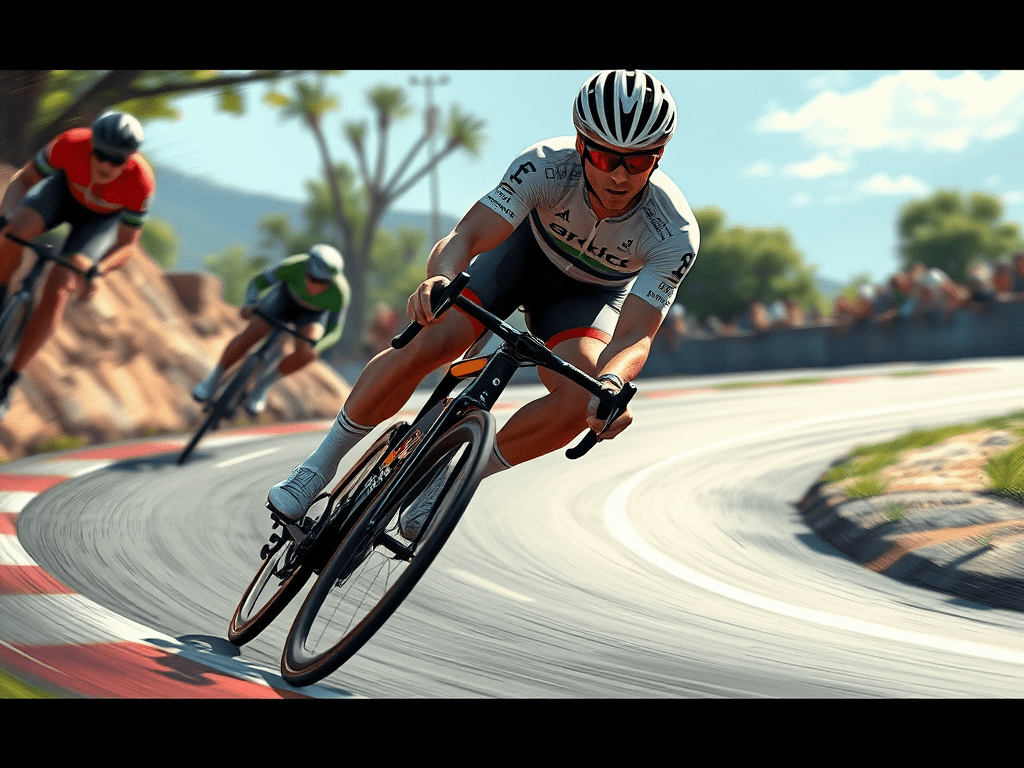
Competitive cycling isn’t just about raw power and endurance—bike handling and race strategy can often determine who crosses the finish line first. Whether you’re navigating a fast-paced criterium, a long road race, or a technical descent, superior bike handling skills give you an edge over the competition. The ability to corner efficiently, draft effectively, descend with confidence, and sprint with maximum power can mean the difference between hanging on in the pack and leading the charge when it matters most.
Riders often spend countless hours building their aerobic capacity but neglect the skill work that could make them more efficient and safer in a race. Sharpening these abilities through focused practice will lead to major gains, allowing you to conserve energy, ride more smoothly, and race with greater confidence.
Key Skills for Racing Success
Cornering: How to Take Fast, Smooth Lines
Cornering is one of the most important bike handling skills in racing. A poorly executed turn can cost valuable speed and force a rider to waste energy accelerating out of it. The key to effective cornering is maintaining momentum while staying in control.
- Approach the turn wide, apex smoothly, and exit wide to maintain speed.
- Keep your outside pedal down and weight shifted toward it for stability.
- Look through the turn instead of focusing on the road right in front of you.
Practicing cornering at increasing speeds in a controlled environment, such as an empty parking lot, can help improve confidence.
Drafting: Conserving Energy by Positioning Properly
Drafting effectively in a race is what allows riders to conserve energy and stay with the pack. Without proper positioning, a cyclist can find themselves wasting watts fighting wind resistance.
- Stay about 6-12 inches behind the wheel in front of you for maximum aerodynamic benefit.
- Relax your upper body to absorb small movements in the group and avoid sudden braking.
- Anticipate changes in pace rather than reacting late and having to surge.
Practicing in group rides and paceline drills can help develop smoother drafting skills, making it easier to stay with the peloton when the pace picks up.
Descending: Staying Aero and Stable at High Speeds
Confident descending can be a race-winning skill, particularly in road races with technical descents. Riders who hesitate or brake too much lose time and energy.
- Keep your weight low and centered for stability.
- Stay relaxed—tense arms and shoulders can make handling less precise.
- Use your drops for a lower center of gravity and better bike control.
Practicing descents in a controlled manner, gradually increasing speed while focusing on smooth handling, will build confidence over time.
Sprinting: Staying Low and Engaging Full-Body Power
A strong sprint isn’t just about leg power—it’s about positioning, technique, and timing. The best sprinters generate explosive power while staying aerodynamic and stable.
- Keep your upper body low and head down to reduce wind resistance.
- Pull up on the bars as you drive down with your legs to engage full-body strength.
- Time your sprint correctly—starting too early can lead to burnout before the line.
Short, high-intensity sprint drills at the end of rides can help refine technique and power output.
Practical Drills to Improve Handling
Slalom Drills for Cornering Confidence
Set up cones or markers in an empty lot and practice weaving through them at increasing speeds. This helps develop smoother bike control and confidence in leaning into turns.
Group Ride Practice for Drafting and Positioning
Riding in a controlled paceline teaches riders how to manage their position, maintain a steady effort, and anticipate changes in pace. Practicing race-like scenarios in training rides can simulate real race conditions.
Common Mistakes and How to Fix Them
Even experienced cyclists make handling mistakes. Here are two of the most common and how to correct them:
- Braking Too Hard in Corners
- Fix: Slow down before entering the turn, then release the brakes and lean in smoothly.
- Poor Pack Positioning Leading to Wasted Energy
- Fix: Stay near the front third of the pack to avoid sudden accelerations and stay in the draft.
Bike handling and strategy are just as important as fitness in competitive racing. Dedicating time to skill work will make you a more efficient, confident, and successful racer. Whether through group rides, training races, or structured drills, refining these abilities will give you a crucial edge when it counts. The best riders aren’t just the strongest—they’re the smartest and most skilled on the bike.
Discover more from ABC Endurance
Subscribe to get the latest posts sent to your email.
