
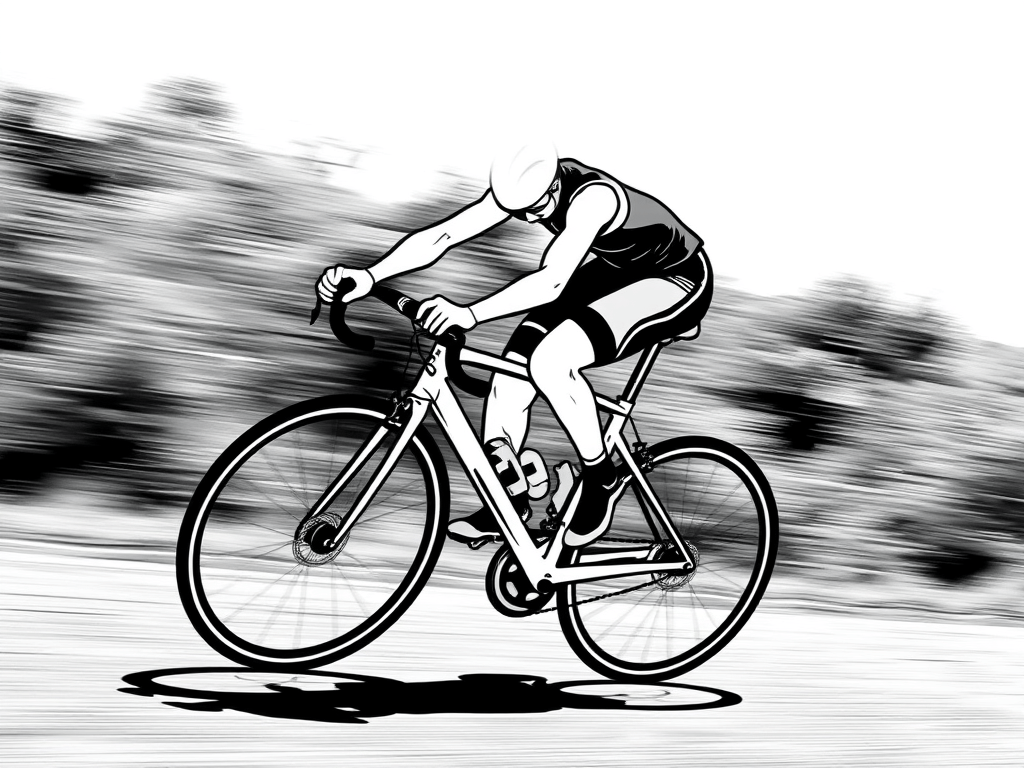
Quickness is essential for agility, responsiveness, and transitions in endurance sports.
When we think about endurance sports, we often focus on stamina and strength, but quickness plays a crucial role in performance and injury prevention. Whether you’re a runner responding to terrain changes, a cyclist adjusting to a sprint, or a triathlete making rapid transitions, quickness can give you an edge.
What is Quickness?
Quickness is your ability to react and accelerate efficiently. It involves a combination of neuromuscular coordination, reaction time, and explosive movement. Unlike raw speed, which measures how fast you can sustain high velocities, quickness is about how rapidly you can initiate movement, change direction, or respond to external stimuli.
Why Quickness Matters for Endurance Athletes
While endurance sports emphasize sustained effort, quickness contributes to:
- Efficiency: Faster reactions help optimize movement, reducing wasted energy.
- Responsiveness: Whether dodging an obstacle or reacting to competition, quickness keeps you sharp.
- Injury Prevention: Improving quickness enhances coordination and stability, lowering injury risk.
- Competitive Performance: Whether responding to surges in a race or handling unpredictable terrain, quickness can be a game-changer.
Key Quickness Assessments
To measure your quickness, try these tests:
1. Ground Contact Time Test (For Runners)
Ground contact time (GCT) measures how long your foot stays in contact with the ground per step. Elite runners typically have shorter GCT, improving their running efficiency.
How to test:
- Use a smartwatch with a running dynamics sensor, or an app like RunScribe.
- Run a short distance at race pace and check your average ground contact time.
- Benchmark: Elite runners have a GCT of ~200 milliseconds, while recreational runners often fall between 250-300 milliseconds.
Improvement Tip: Incorporate plyometric drills like jump rope, quick-feet drills, and short uphill sprints.
2. 5-10-5 Agility Test (For All Endurance Athletes)
This test assesses your ability to change direction quickly, which is especially useful for trail runners, triathletes, and cyclists handling technical courses.
How to test:
- Set up three cones in a straight line, 5 yards apart.
- Start at the middle cone, sprint 5 yards to the right cone, touch the ground, then sprint 10 yards to the far-left cone, touch the ground, and finally sprint back to the center.
- Time yourself from start to finish.
Improvement Tip: Work on lateral movement drills, agility ladder exercises, and short explosive sprints.
3. Cadence Drills for Cycling and Running
Cadence measures how quickly your legs move per minute. A higher cadence means faster turnover and better efficiency.
How to test:
- Running: Count how many steps you take in one minute at your normal pace.
- Cycling: Use a bike computer to track revolutions per minute (RPM).
- Benchmark: Aim for ~180 steps per minute (spm) in running and 85-100 RPM in cycling.
Improvement Tip: Practice high-cadence drills like quick-feet running or spin-ups on the bike.
📌 Action Step: Test Your Quickness
Choose one of the quickness tests above, record your results, and compare them to benchmarks. Identify areas for improvement and incorporate specific drills into your training.
By developing your quickness, you’ll enhance your efficiency, reduce injury risk, and gain a competitive advantage in endurance sports. Let’s get faster and more responsive together!
Weekend Activity: Quickness Challenge Workout – Choose one drill from this post and practice it for 15-20 minutes, focusing on precision and speed.
Discover more from ABC Endurance
Subscribe to get the latest posts sent to your email.
