
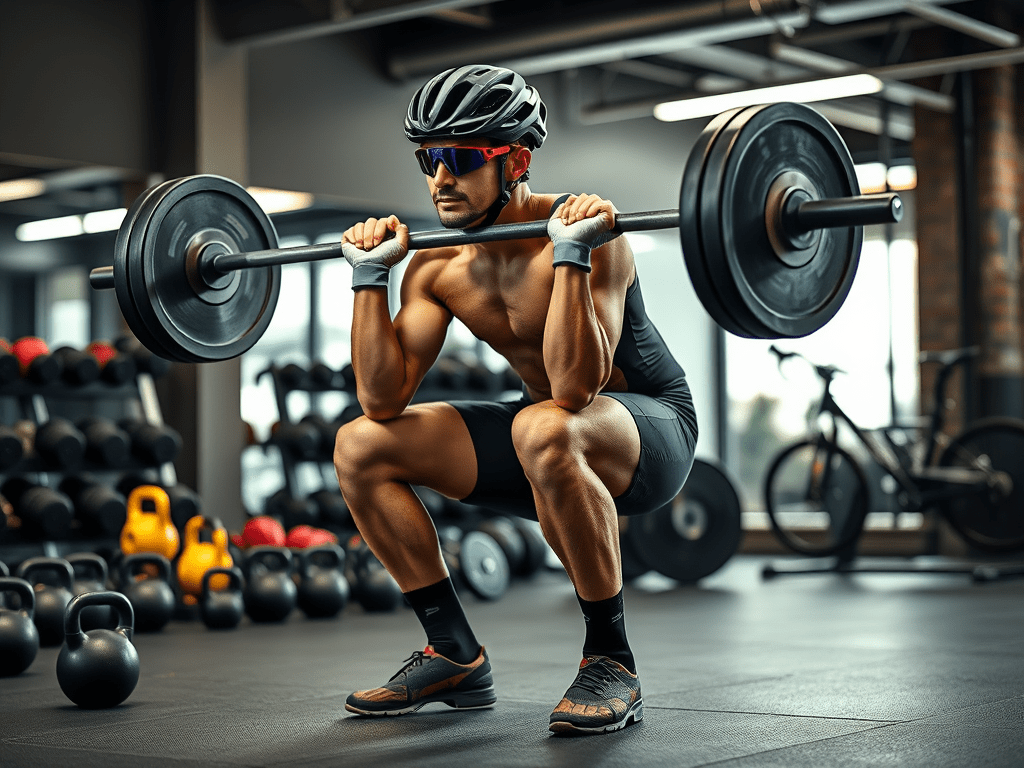
Strength training isn’t just for bodybuilders—it’s a crucial component of a cyclist’s training plan. While cycling improves cardiovascular endurance and leg strength, adding strength training helps build power, reduce injury risk, and enhance overall cycling efficiency. Strengthening key muscle groups can support cycling performance, prevent muscle imbalances, and improve your power output on the bike. In this post, we’ll explore how strength training complements endurance cycling, the key muscle groups cyclists should focus on, and how to integrate these workouts into your routine.
Key Muscle Groups for Cyclists
Cycling predominantly works the lower body, but having a strong core and upper body also plays a crucial role in improving performance and maintaining proper form. Focusing on the following muscle groups will help maximize your cycling efforts:
- Core: A strong core is essential for maintaining stability on the bike, especially when riding for long durations. A weak core can lead to poor posture, fatigue, and discomfort. Cyclists benefit from exercises that engage the abdominal muscles, obliques, and lower back, providing a stable base to transfer power to the pedals.
- Glutes: The gluteus muscles are involved in driving the pedal stroke, especially during climbs. Strengthening the glutes helps generate more power per pedal stroke and supports the lower back and hips during long rides. A strong posterior chain is also important for preventing cycling-related injuries.
- Hamstrings: While the quadriceps are the primary muscles used for pedaling, the hamstrings help balance the movement, especially during the upward phase of the pedal stroke. Strengthening the hamstrings will reduce the risk of muscle imbalances, which can lead to injuries, and will increase cycling efficiency.
- Quadriceps: The quads are responsible for pushing the pedal down during cycling. Having strong quads is key to sustaining efforts, especially during climbs and sprints. Proper quadriceps strength will allow you to exert more power and ride at higher intensities without premature fatigue.
Types of Strength Workouts
To enhance cycling performance, cyclists should engage in strength training exercises that target these key muscle groups. Here are a few examples:
- Squats: Squats are a foundational strength exercise that targets the quads, glutes, and hamstrings. Performing squats with proper form can help improve lower body strength, allowing you to push harder on the pedals and generate more power. Cyclists can use bodyweight squats or add resistance with barbells or dumbbells.Progression Tip: Start with bodyweight squats and gradually add resistance with free weights or a barbell. Try single-leg squats for a more cycling-specific challenge.
- Lunges: Lunges are another excellent lower body exercise, targeting the quads, glutes, and hamstrings. This exercise mimics the cycling motion by focusing on the forward motion of the legs and helps improve balance and coordination.Progression Tip: Begin with bodyweight lunges, then progress to weighted lunges as you build strength. Walking lunges can help simulate the forward motion of cycling and add dynamic movement.
- Deadlifts: Deadlifts primarily work the hamstrings, glutes, and lower back. This compound movement is great for building strength in the posterior chain, which is essential for powerful pedaling and injury prevention.Progression Tip: Start with lighter weights and focus on form, then gradually increase the load as your strength improves.
- Core Stability Exercises: Cyclists need a strong core to maintain posture and transfer power effectively. Exercises like planks, side planks, and leg raises help build core strength and stability. Incorporating stability balls or resistance bands can also add variety to your core workouts.Progression Tip: Start with basic planks and progress to more advanced variations, such as adding leg lifts or performing the plank on a stability ball.
- Step-Ups and Bulgarian Split Squats: These exercises focus on the quads, glutes, and hamstrings, mimicking the motion of cycling while also building balance and strength. Step-ups can be performed using a bench or a box, while Bulgarian split squats involve elevating the back foot on a bench.Progression Tip: Start with bodyweight exercises and add weights or increase step height as you gain strength.
Balancing Strength and Endurance Training
One of the biggest challenges for cyclists is balancing strength training with endurance training. Too much time spent lifting weights without adequate time for cycling can hinder performance, while overemphasis on cycling without strength work can lead to muscle imbalances and fatigue. Here are some tips for striking the right balance:
- Schedule Strength Training During Off-Cycle Days: To ensure strength training doesn’t interfere with cycling performance, plan strength sessions on non-ride days or after shorter cycling sessions. For example, strength training on a rest day or after a recovery ride can help prevent fatigue from affecting your longer rides or high-intensity training.
- Incorporate Strength Work into Cycling Sessions: For cyclists with time constraints, consider integrating short strength circuits at the end of a cycling workout. These can include bodyweight exercises or use of light dumbbells, focusing on your core and lower body. Keep these workouts short and efficient, around 20-30 minutes, to avoid interfering with your primary cycling training.
- Periodize Strength Training: During base building phases of training, strength work can be a greater focus, while closer to competition, the intensity and volume of strength training may decrease to avoid fatigue. A coach can help tailor your strength training schedule to fit your cycling goals.
Strength training is an essential complement to cycling, helping cyclists improve power, reduce injury risk, and enhance overall performance. By strengthening key muscle groups such as the core, glutes, quads, and hamstrings, cyclists can maintain proper posture, transfer power efficiently, and build endurance. A well-rounded strength training plan, tailored to cycling goals, will improve not only cycling performance but also help maintain long-term health and injury prevention.
Working with a coach can provide personalized strength training plans that integrate seamlessly with your cycling routine, ensuring that you are maximizing your potential without overloading your schedule. A coach can help structure workouts that improve cycling performance while maintaining proper balance between strength and endurance work. For personalized guidance on strength training, reach out to brycoward@gmail.com to learn more about tailored coaching programs that suit your specific needs.
Discover more from ABC Endurance
Subscribe to get the latest posts sent to your email.
